Ordering custom food-grade flexible packaging doesn't have to be a guessing game. Here is the exact step-by-step process we use to get your custom food pouches from concept to delivery without the usual headaches.
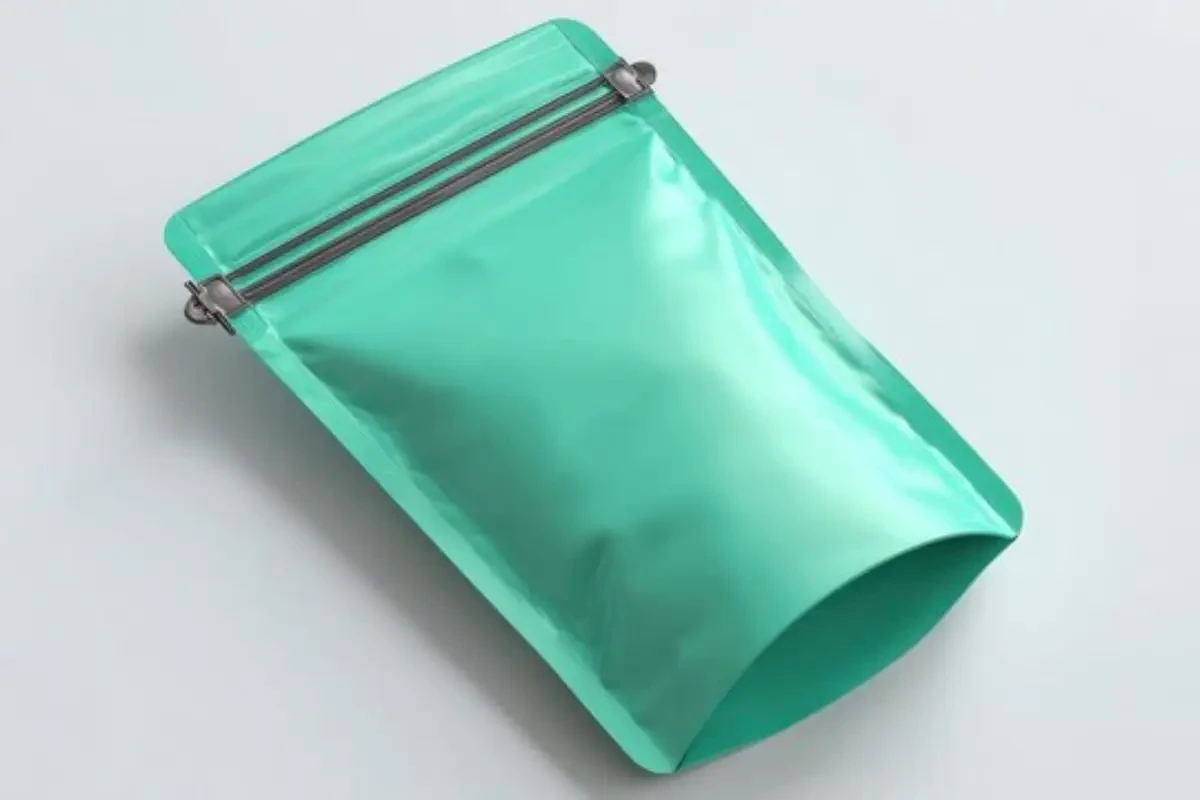
Last month, a snack brand founder emailed us in a panic. Their current supplier just doubled the minimum order quantity on their stand-up food pouches, and they were stuck with two months of inventory they didn't need. Sound familiar? Ordering custom food-grade flexible packaging shouldn't feel like a trap. Let's walk through exactly how to order custom flexible packaging and pouches for your food products, step by step, so you actually get what you need without the hidden surprises.
The Pre-Order Reality Check
Before you even think about asking for a quote, you need your specs locked down. We get a lot of inquiries that just say, "I need a pouch for nuts." That doesn't give us much to work with.
Here’s what you actually need to figure out first:
Dimensions: Width, height, and bottom gusset. Don't just guess. Measure your current product or create a physical mockup.
Material Structure: This is where it gets technical. A standard snack needs a PET/PE structure (maybe 120 microns total). But if you're packing something oily or needing a long shelf life, you might need PET/AL/PE (aluminum foil barrier).
Features: Do you need a zipper? A degassing valve for coffee? A tear notch?
Frankly, the more specific you are here, the less back-and-forth you'll endure later.
Getting an Accurate Quote (Without the Surprise Costs)
Here's the thing about pricing in flexible packaging: it fluctuates based on raw material costs and your specific choices.
To get a real number, suppliers need to know your quantity, size, material, and printing colors. Let’s look at some real-world numbers. A standard 500-gram coffee stand-up pouch with a degassing valve usually runs between $0.08 and $0.15 per unit at a 5,000-piece MOQ. If you drop your order to just 500 pieces using digital printing, expect to pay $0.40 to $0.60 each. It's just how the setup costs amortize.
Also, watch out for cylinder costs if you're using rotogravure printing. Each color requires a separate cylinder, costing around $150 to $250 each. If your design has 8 colors, that's over $1,000 in one-time tooling fees before you even print a single pouch.
The 7-Step Ordering Process
Once you agree on the price, the actual ordering process kicks in. Here is how it usually flows at our 37-year factory:
Inquiry & Spec Confirmation: We lock in the exact dimensions and material structure.
Quotation & PI: You get a Proforma Invoice. Pay the 30-50% deposit to get things moving.
Artwork & Pre-press: Your design team sends the AI or PDF files. Our pre-press team checks for bleed, resolution (needs to be at least 300 dpi), and color separations.
Digital Proof & Physical Proof: We send a digital PDF for layout approval. But here's a tip: digital proofs don't show exact color under factory lighting. If color matching is critical, ask for a physical proof. It takes an extra 3-4 days but saves you from a massive headache.
Cylinder Making / Plate Setup: For rotogravure, we engrave the cylinders. For digital, we just load the RIP files.
Production & QC: Printing, laminating, curing (usually 24-48 hours for the adhesive to set), slitting, and pouch making. Our ISO 9001 and BRCGS certified facility runs strict metal detection and visual inspections.
Shipping: Final balance payment, then we load the containers or arrange air freight.
Common Pitfalls & How to Avoid Them
Look, first-time buyers make mistakes. It's part of the learning curve. But some mistakes cost thousands of dollars.
Ignoring the sealant layer. The one downside we see fairly often is brands focusing so much on the outer print layer they forget the inner food-contact layer needs to be food-grade PE or CPP. If it's not certified, your product fails FDA or EU compliance. Always confirm the inner layer is food-safe.
Underestimating lead times. Everyone wants their pouches yesterday. Standard lead time is 15-25 days. Rush jobs exist, but they cost about 20-30% more and disrupt the production schedule. Plan for the standard timeline.
Forgetting about the dieline. If you're designing custom flat bottom pouches, the gusset folds change the artwork layout. Always ask the supplier for the exact dieline template before starting your design.
What to Look for in a Supplier
You have two choices: a trading company or a direct factory.
We usually recommend going direct to a factory like Aorai Pack. You cut out the middleman markup—usually 15-20%—and get direct access to the production floor. When an issue pops up, the factory fixes it. A trading company just has to email the factory and wait.
Check their credentials. For food grade flexible packaging pouch wholesale, they need to be ISO 9001 certified at a minimum. If they have BRCGS, SQF, or FDA registration, that's a massive plus. Also, look at their communication. If they take 3 days to reply to an initial email, imagine how they'll handle a production crisis.
Frequently Asked Questions
Let's clear up a few things that always come up in our inbox.
What's the actual minimum order quantity (MOQ)?
It depends on the printing method. Digital printing can go as low as 100 to 500 pieces, which is great for test runs. But for rotogravure (which gives you the best print quality and lowest per-unit cost), the MOQ is usually 5,000 to 10,000 pieces.
How long does the whole process take?
From the moment you pay the deposit and approve the artwork, expect 15-25 days for production. Add another 5-30 days for shipping, depending on whether you choose sea or air freight.
Can I order retort pouches for ready meals?
Absolutely. Retort pouches require a specific structure, usually PET/AL/CPP, to withstand high-temperature sterilization. We manufacture specialized retort pouches that meet all food safety standards for high-heat processing.
Do you provide design services?
We can tweak your existing files, adjust colors for printing, and set up the dielines. But we aren't a creative design agency. You need to bring the core branding and layout to the table.
Ordering custom food-grade flexible packaging doesn't have to be a guessing game. When you know the materials, understand the pricing structure, and pick the right manufacturing partner, it's actually pretty straightforward. Ready to stop guessing and start packaging? Send over your specs, and let's figure out the exact material structure and pricing for your next run.