Ordering custom gift boxes doesn't have to be a guessing game. This guide breaks down the exact steps, from material selection to final delivery, so you can order with confidence.
Here’s what nobody tells you about ordering custom gift boxes: the actual manufacturing takes about 15 days, but the back-and-forth emails can take months if you don't know what you're doing. We’ve seen brands waste thousands of dollars simply because they skipped the prep work. Let's fix that and get you through the ordering process without the usual headaches.
Before You Even Email a Supplier
Most first-time buyers just say, "I need a nice box for my candles." That’s a great way to get a generic quote that changes three times before production. You need specifics.
First, nail down your dimensions. Not just the outside, but the inside. If you're packaging a 3-inch candle, you need at least 3.5 inches of interior space, plus room for inserts. We usually recommend designing the insert first, then building the box around it.
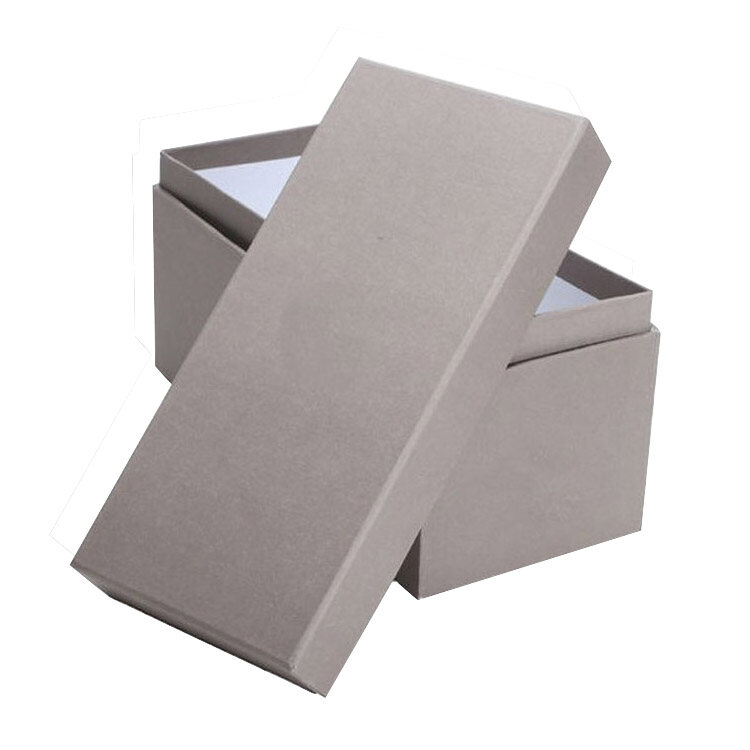
Next, pick your material and structure. You’re generally looking at two main routes. For lightweight, cost-effective items, folding cartons made from 350gsm to 400gsm art paper run about $0.45 to $0.90 per unit. But if you want that premium unboxing feel, you need rigid gift boxes. These use 1200gsm to 1500gsm greyboard wrapped in coated paper. They cost more—roughly $1.50 to $4.50 each depending on finishes—but they hold up and scream luxury. Frankly, there's no middle ground here. It depends entirely on your retail price point.
Also, think about finishes early. Matte lamination, spot UV, hot stamping—these aren't just afterthoughts. They dictate the paper weight and the production timeline. A simple matte finish adds maybe $0.10 per box. Add gold foil and spot UV, and you're looking at another $0.30 to $0.50. It adds up.
Getting a Quote That Actually Sticks
When you finally reach out to a manufacturer, send them a tech pack. Yes, even for boxes. Include your exact dimensions (L x W x H in mm), material specs, target quantity, and destination port.
Here’s the thing: if a supplier gives you a quote without asking about the insert, the shipping method, or your artwork files, run. They’ll hit you with surprise costs later. At Aorai Pack, we’ve been running a 37-year factory with ISO 9001 and FSC certifications. We know that a transparent quote includes tooling costs (usually $150-$300 for custom molds or die-cut plates) and realistic shipping estimates. Expect your per-unit price to drop by about 20-30% if you bump your order from 500 to 2000 pieces. That’s the reality of economies of scale in packaging.
Make sure your artwork is ready. We need vector files (AI or PDF) with a 3mm bleed. If you send us a low-res JPEG, we’ll just send it back. It saves us both time.
The Sample Stage: Don't Skip This
You might be wondering if you can just skip straight to mass production to save time and money. Don't.
There are two types of samples you should consider. First, the white sample (or dummy sample). This checks the size, structure, and how the product fits. It costs maybe $20 and takes 3 days. Then comes the print sample. This shows the exact colors, foil placement, and textures. It costs around $80 to $150 and takes 5-7 days.
We usually tell our clients: pay for the print sample. Seeing a 3D rendering on a screen is completely different from holding a magnetic closure box in your hands and feeling the snap of the magnet. It’s the only way to catch a typo on the bottom flap or realize the gold foil looks more yellow than you expected before 2,000 units are ruined.
Production and the Reality of Lead Times
Once you approve the sample and pay the deposit (usually 30% to 50%), production begins. Standard lead time is 12 to 18 days. But here’s a reality check: if you're ordering right before a major holiday like Christmas or Valentine's Day, factories are booked solid. We advise placing holiday orders at least 45 to 60 days in advance.
During production, quality control isn't just a final check. In our facility, we do inline inspections. We check the glue adhesion on rigid boxes, ensure the foil stamping isn't peeling, and verify that the magnetic closures align perfectly. The one downside we see fairly often in the industry is suppliers who only check 5% of the final batch. We push for a 100% visual inspection on critical cosmetic or luxury packaging. It takes longer, but it saves you from shipping defective boxes overseas.
Also, consider sustainability. If your brand cares about the environment, ask for FSC-certified paper and soy-based inks. It might cost about 5-8% more upfront, but it’s a massive selling point for your customers.
Common Pitfalls First-Time Buyers Fall Into
Let’s be honest, mistakes happen. But you can avoid the expensive ones.
Pitfall 1: Ignoring shipping volume. Rigid gift boxes ship flat, but they still take up space. A 20ft container holds about 2,500 to 3,000 medium-sized rigid boxes. If you don't calculate the CBM (Cubic Meters) early, your shipping costs might eat your profit margin. Always ask the supplier for the packed dimensions and weight.
Pitfall 2: Overcomplicating the design. Every extra finish adds a day to production and increases the defect rate. Keep it elegant. A simple matte black box with a single gold foil logo often looks more premium than a box with five different techniques. Sound too good to be true? Just look at Apple’s packaging.
Pitfall 3: Choosing a trading company over a factory. Trading companies are great for small, off-the-shelf orders. But for custom packaging, you want direct factory communication. It cuts out the middleman markup (usually 15-25%) and speeds up problem-solving when things inevitably go wrong.
Final Thoughts on the Process
Ordering custom packaging is an investment in your brand's first impression. It’s not just about finding the cheapest unit price; it’s about finding a partner who understands your structural and aesthetic needs. Take the time to prep your specs, invest in a good sample, and communicate clearly. Your unboxing experience—and your bottom line—will thank you.