Wondering how foil stamping transforms standard rigid boxes into luxury packaging? We break down the process, real costs, and design rules for 2026.
1. The Real Impact of Foil Stamping on Luxury Packaging
Last month, a premium cosmetics brand came to us with a problem. Their standard matte black rigid boxes looked great in the office, but on the retail shelf, they just blended in. The fix? We added blind debossing and gold foil stamping to the lid. Suddenly, the perceived value of the box—and the product inside—jumped overnight.
Foil stamping (or hot foil stamping) isn't just a finishing touch for luxury rigid setup boxes. It's the main event. But if you're new to specifying it for your packaging, the technical details can get messy. Let's clear that up and look at what actually happens on the factory floor.
2. What Actually Happens During the Stamping Process?
It’s a mix of heat, pressure, and a metallic film. A custom-made die presses the foil onto the paperboard, bonding the metallic layer to the surface. Simple enough, right?
Here's the thing about the dies, though: material matters. Magnesium is cheap but wears out after about 10,000 impressions. If you're running a 50,000 unit order for a holiday launch, you need brass. It costs roughly 30% more upfront, but it holds the edge sharpness perfectly. Copper sits right in the middle. We usually recommend brass for any run over 5,000 pieces to avoid mid-run quality drops.
3. The Real Costs (No Fluff)
Let's be honest, pricing is usually your biggest headache. For a standard 1-color gold foil stamp on a rigid box lid, expect to pay between $0.15 and $0.45 per unit, depending on the foil area size.
Setup fees for the die usually run $80 to $150. If you want multi-color foil or intricate patterns, that setup cost can easily double. And don't forget the substrate. Foil doesn't stick well to uncoated, porous paper. You'll need a coated stock or a specialized primer, which adds about $0.05 per box. Most of the time, though there are exceptions, a 157gsm coated art paper wrapped over 1200gsm greyboard gives the best foil adhesion.
4. Where Foil Stamping Falls Short
It's not perfect — here's where it falls short. The one downside we see fairly often is registration issues on textured papers. If you're using a heavily textured outer wrap for your luxury rigid boxes, the foil might not make full contact in the valleys of the texture. It looks patchy.
We usually recommend smooth, coated papers. Alternatively, apply a smooth patch of paper exactly where the foil will sit. Also, watch out for foil cracking. If the box gets bent or scored too close to the foil area, the metallic film will crack. Keep foil elements at least 3mm away from sharp fold lines.
5. Combining Techniques for Maximum Impact
Generally speaking, foil stamping alone isn't always enough for ultra-premium packaging. We see the best results when brands combine it with other effects.
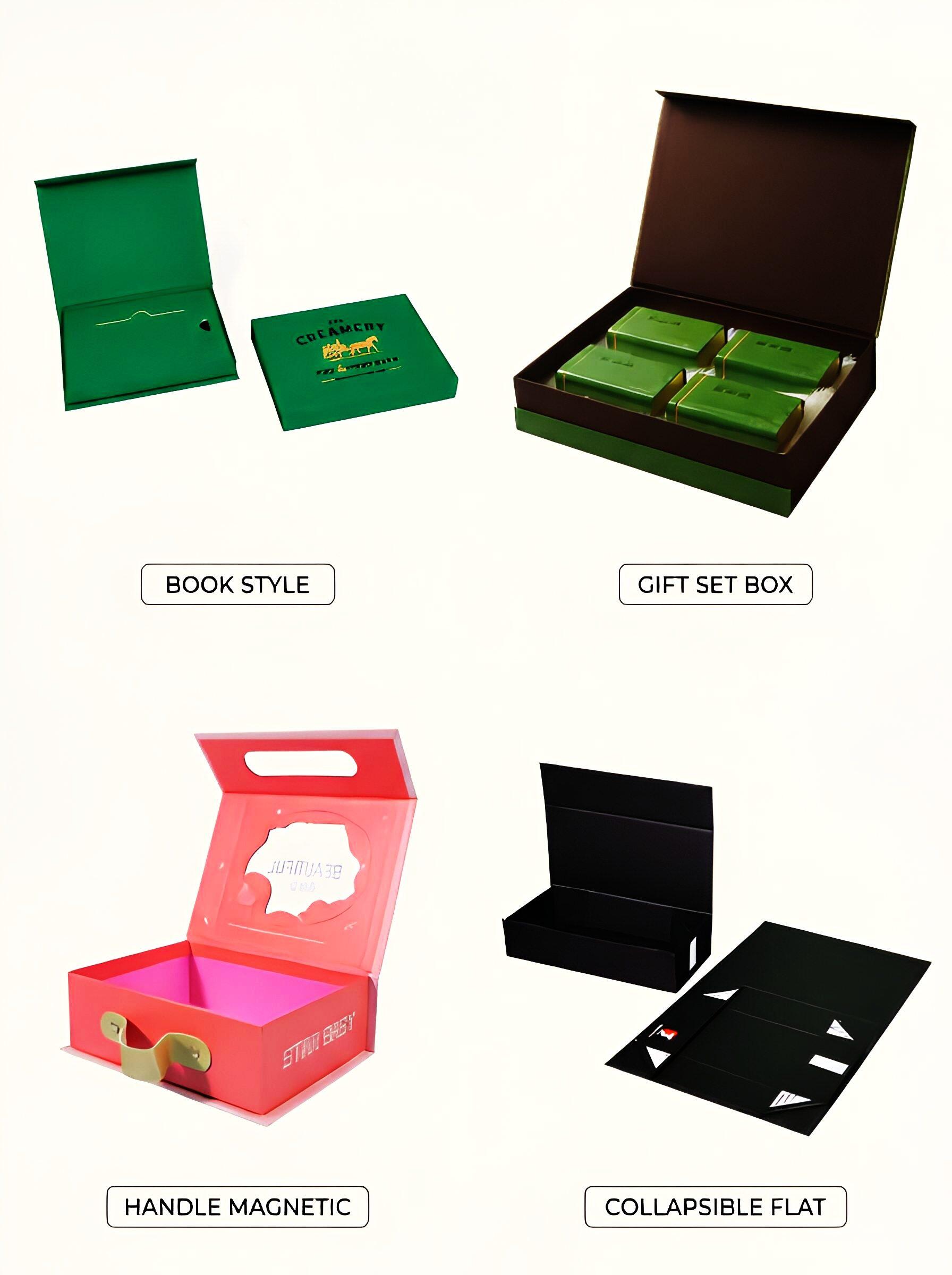
Take a look at our magnetic closure gift boxes. We often pair a soft-touch lamination with spot UV and gold foil. The contrast between the matte background, the glossy UV, and the reflective foil creates a tactile experience that customers literally can't put down. Just remember: more techniques mean longer lead times. A standard box takes about 10-12 days. Add foil, embossing, and UV, and you're looking at 15-18 days.
6. Choosing Your Foil (It's Not Just Gold and Silver)
Here's what nobody tells you about foil: the color range is massive. Yes, gold and silver are the workhorses, taking up about 70% of our foil orders. But we're seeing a huge shift toward holographic, rose gold, and even matte black foils.
Holographic foil adds about 15-20% to the material cost, but for tech or youth-oriented brands, the ROI on shelf appeal is massive. One caveat: metallic foils reflect light, which makes photography for your e-commerce site tricky. If you're selling primarily online, a pigmented foil (like a solid opaque red or blue) might photograph better than a highly reflective metallic one.
7. Design Rules That Actually Matter
Designers often send us files that look beautiful on screen but fail in production. Here are the golden rules we enforce in our factory:
Line weight: Keep foil lines at least 0.5pt thick. Anything thinner will break up during the stamping process.
Solid areas: Avoid massive solid foil blocks. It looks cheap and traps air bubbles. If you need a large metallic area, use a metallic paper stock instead and just foil the logo.
Overprinting: Don't print standard CMYK ink directly over foil. It won't stick. If you need color over foil, you have to foil first, then print, or use a specialized UV ink.
Bleed: Always include a 1mm bleed for foil elements near the edge. The stamping die needs a margin of error.
8. Why Factory Experience Matters
You might be wondering why all this technical detail matters when you're just trying to order boxes. Because hinged lid rigid boxes are complex, and foiling them requires absolute precision.
At Aorai Pack, our 37-year factory has dialed in the exact temperature and pressure needed for different substrates. We're ISO 9001 and FSC certified, which means our processes are standardized. When a client asks for a specific Pantone gold on a 1200gsm greyboard box wrapped in 157gsm art paper, we don't guess. We know exactly which foil brand and die depth to use. That's the difference between a box that looks premium and one that looks like a DIY project.
9. Frequently Asked Questions
Can I foil stamp on the inside of a rigid box?
Technically, yes. But should you? Honestly, rarely. The inside of a luxury box is usually lined with flocking, velvet, or a soft-touch paper. Foil doesn't adhere well to those textures, and it's hidden anyway when the box is closed. Save that budget for the exterior.
What's the minimum order quantity (MOQ) for foil stamped boxes?
For custom rigid boxes with foil stamping, our standard MOQ is 500 pieces. You can go lower to 100 pieces for digital foil prototyping, but the per-unit cost will be significantly higher—roughly 3 to 4 times the bulk rate.
Does the foil fade or scratch off over time?
High-quality hot foil is incredibly durable. It doesn't fade under normal UV light, and it resists scratching much better than metallic inks. Just avoid using abrasive cleaning chemicals on the box surface.
Can I use foil on recycled paper?
Yes, but you need to be careful. Recycled papers often have a rougher texture and lower surface strength. We recommend using a heavily coated recycled stock to ensure the foil bonds properly without tearing the paper fibers during the stamping process.
Foil stamping is a powerful tool, but it demands respect. Treat it right, and it will elevate your rigid packaging to a level that justifies a premium price point. If you're ready to spec out your next run, send over your dielines. We'll review the foil areas and let you know if anything needs tweaking before we cut a single die.